Baby rooms are one of the most important environments in an early years centre. They set the foundation for lifelong learning, shape early emotional patterns, and provide babies with their first experiences of safety, connection, and exploration. A well-designed baby room is interactive, responsive, calm, and rich in developmental opportunities not overstimulating, not chaotic, and not overwhelming.
This guide is created for early years educators, centre leaders, and practitioners who want to build baby rooms that nurture curiosity, connection, cognitive development, sensory exploration, and emotional security. It’s friendly, professional, hands-on, and suitable for all types of centres globally Montessori, Reggio-inspired, play-based, Canadian, British, American, UAE, and everything in between.
Let’s explore how to design baby rooms that honour the whole child mind, body, senses, emotions, and early communication.
Understanding the Baby Room as a Learning Environment
Babies (3–18 months) learn differently from toddlers and preschoolers. Their development is rapid, sensory-driven, highly dependent on relationships, and shaped by their physical environment.
Baby rooms must reflect:
- Attachment-based care
- Responsive interactions
- Safe exploration
- Sensory-rich but not overwhelming spaces
- Consistent routines
- Warm human connection
- Opportunities for movement
The purpose of a baby room is not to “teach” in the traditional sense — it is to create opportunities for growth through:
- Movement
- Touch
- Interaction
- Sensory play
- Language exposure
- Relationship-building
An interactive baby room is one where adults invite babies into learning moments through touch, expression, sound, and materials.
The Power of Relationships in Baby Rooms
No amount of equipment, toys, or décor can replace responsive, nurturing relationships.
Babies learn best through:
- Warm eye contact
- Gentle physical touch
- Soft, calm voices
- Repetition and routine
- Comfort when upset
- Interaction with trusted adults
- Consistent primary caregivers
Every interactive baby room begins with secure attachment.
A baby will not explore a beautiful, engaging environment unless they feel safe.
How educators create emotional security:
- Greet each baby by name
- Smile and use warm facial expressions
- Maintain predictable routines
- Offer consistent caregiving from key persons
- Validate all emotions (“You’re sad, I’m here.”)
- Use physical closeness (cuddles, holding, gentle rocking)
- Respond immediately to cries
- Avoid rushed, task-oriented caregiving
- Narrate actions (“I’m lifting you gently now,” “I hear you, sweetheart.”)
When babies trust their environment and caregivers, their exploration becomes deeper and more interactive.
Designing an Interactive Baby Room Environment
The physical setup of a baby room should be:
- Calm
- Neutral
- Safe
- Sensory rich
- Open ended
- Natural
- Encouraging movement
- Warm and homelike
Avoid clutter, bright overstimulation, loud colours, and too many materials.
Key areas in an interactive baby room:
1. Cozy, Bonding & Feeding Area
For bottles, breastfeeding, cuddles, and emotional regulation.
Should include:
- Soft armchairs
- Warm lighting
- Soft blankets
- Neutral décor
- A noise machine or calm music
- Space for parent educator collaboration
This area signals comfort, connection, and safety.
2. Floor-Play & Movement Area
Babies must spend as much time on the floor as possible.
This area encourages:
- Rolling
- Crawling
- Reaching
- Grasping
- Core strength
- Spatial awareness
Include:
- Soft mats
- Cushions
- Ramps or low wedges
- Low shelves
- Large, lightweight objects for pushing
- Mirrors at baby height
Movement is the foundation of brain development in the first year of life.
3. Sensory Exploration Area
Sensory play under 18 months is gentle, natural, and safe, not messy play with glitter or complex materials.
Examples:
- Treasure baskets
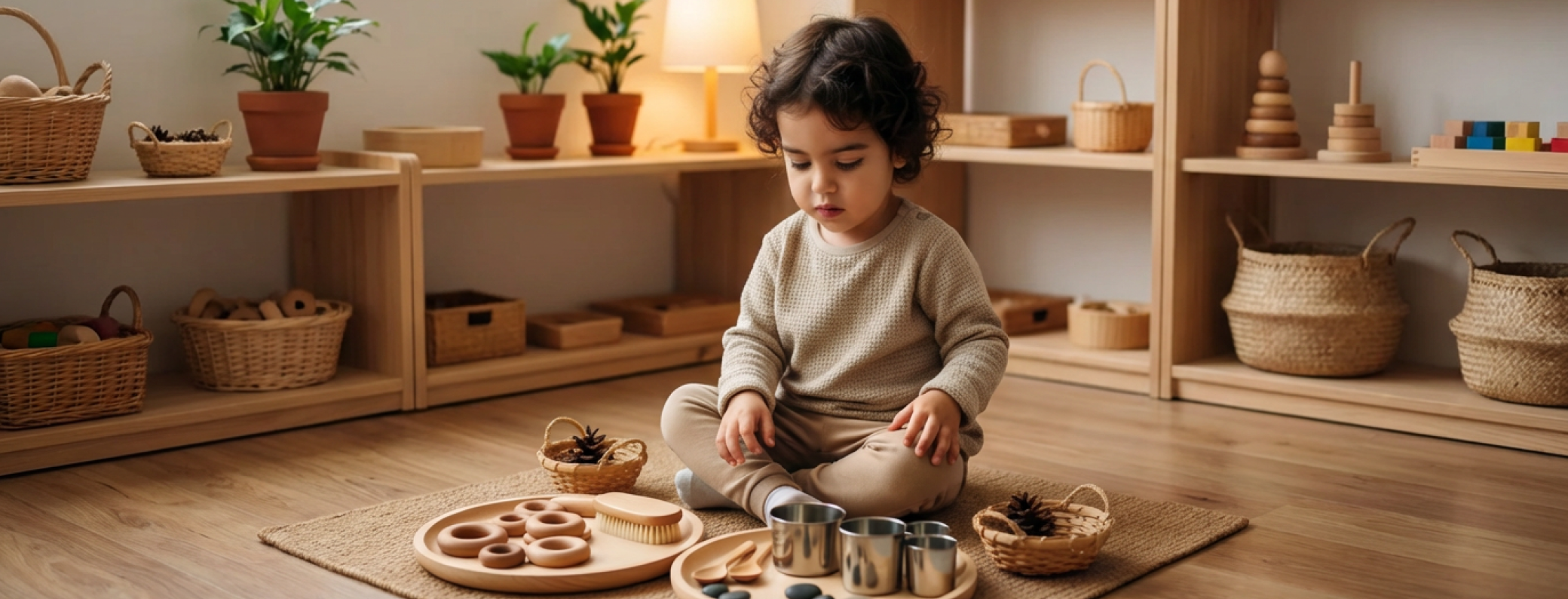
- Natural materials: wooden rings, spoons, pinecones (supervised), soft fabrics
- Sensory bottles
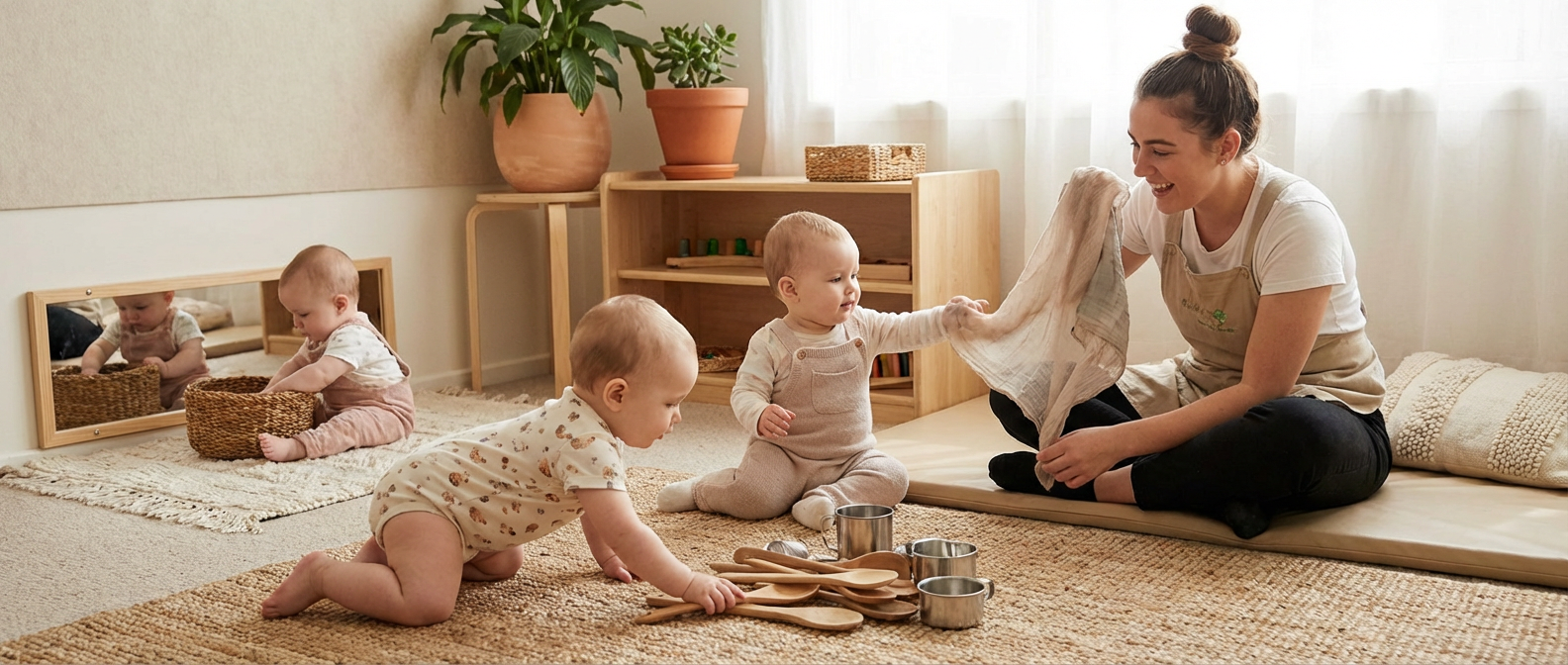
- Soft scarves
- Safe household objects (metal tins, whisks, silicone cups)
- Fabrics of different textures
This area fuels curiosity and independent investigation.
4. Language & Interaction Corner
This area fosters early communication.
Include:
- Books
- Puppets
- Mirrors
- Photos of families
- Soft toys
- Real objects (spoons, brushes, small baskets)
Educators can sit here to talk, sing, read, and narrate.
5. Heuristic Play Area
Heuristic play is about exploration, not instruction.
Materials may include:
- Wooden rings
- Metal cups
- Fabric pieces
- Ribbon strips
- Leather scraps
- Natural sensory items
- Lightweight tubes
Babies investigate texture, shape, size, cause and effect.
6. Safe Climbing & Gross Motor Area (for mobile babies)
Once crawling begins, babies need challenges.
Include:
- Mini climbing arch
- Soft steps
- Cushions
- Low platforms
- Balance beams
- Push toys
- Pull toys
These support vestibular development, balance, and strength.
Interactive Educator Baby Interactions That Boost Learning
The adult is the most interactive element in a baby room.
How educators engage babies matters as much as what toys or activities are provided.
Interactive strategies educators should use daily:
1. Narration
Talk through everything.
- “You’re lifting your arm!”
- “You found the bell!”
- “I’m wiping your face gently.”
- “You’re stretching so high!”
Narration teaches language, connection, emotional labeling, and trust.
2. Serve and Return Interaction
The most critical part of early brain development.
- Baby makes a sound, looks, or gestures
- Educator responds
- Baby responds back
- Interaction becomes a mini conversation
This builds:
- Social skills
- Language
- Emotional safety
- Brain architecture
3. Face to Face Interaction
Babies learn best when seeing facial expressions.
Educators should:
- Get down to baby level
- Mirror facial expressions
- Smile warmly
- Make gentle sounds
- Use exaggerated expressions
4. Singing & Rhythm
Babies adore predictable rhythms.
Use:
- Action songs
- Humming
- Gentle tapping
- Nursery rhymes
- Cultural songs
- Lullabies
Music stimulates language areas of the brain.
5. Sensory Invitations
Offer babies:
- Feathers
- Wooden balls
- Silk scarves
- Cold metal spoons
- Soft brushes
Instead of “activities,” think “invitations to explore.”
6. Responsive Touch
Holding, rocking, and physical closeness help regulate emotions.
Touch is interactive learning.
7. Naming Emotions
Emotional literacy begins in infancy.
Examples:
- “You’re curious!”
- “You look surprised.”
- “You’re feeling upset; I’m here.”
This builds emotional intelligence early.
The Role of Routines in Interactive Learning
Routine offers security, and security encourages exploration.
In a baby room, routines should feel:
- Predictable
- Calm
- Flexible
- Respectful
- Slow-paced
Routine moments are full of interactive learning even more than planned play sessions.
Interactive routine activities include:
- Feeding
- Diaper changes
- Nap transitions
- Arrival and goodbye
- Getting dressed
- Washing hands
- Bottle time
- Soothing when upset
These one on one moments build attachment and trust.
Creating a Sensory Rich Baby Room (Without Overstimulation)
Babies learn through their senses first long before language, before logic, and before symbolic play. A sensory rich baby room doesn’t mean loud colours, flashing toys, or busy walls. In fact, those overstimulate the nervous system.
A sensory rich environment is about natural, calming, gentle sensory invitations that help babies:
- strengthen neural connections
- discover cause and effect
- develop motor skills
- regulate emotions
- explore safely
Here’s how to design a sensory engaging baby room that supports development without overwhelm.
1. Choose Neutral, Calm Colours
Soft creams, beiges, light greens, gentle pastel blues, warm whites, and light browns help babies feel safe and regulated.
Bright primary colours often create overstimulation and cause:
- crying
- irritability
- difficulty settling
- shorter attention spans
The calmer the room, the deeper the baby’s engagement.
2. Use Natural Materials Over Plastic
Babies love:
- wood
- metal
- fabric
- silicone
- woven textures
- baskets
- sheepskin rugs
- bamboo objects
Natural materials stimulate the senses more deeply than plastic toys.
3. Mirrors at Baby Level
Mirrors are one of the most interactive tools in baby rooms.
Benefits:
- teaches body awareness
- strengthens self-recognition
- supports tummy time
- encourages movement toward reflection
- promotes facial tracking
Place a long, low mirror near soft mats or movement areas.
4. Treasure Baskets
Treasure baskets encourage independent exploration. Fill them with:
- wooden rings
- scarves
- metal cups
- silicone spoons
- soft brushes
- fabric scraps
- rattles
- small baskets
- natural objects (supervised)
Rotate contents weekly for freshness.
5. Sensory Bottles
Visual stimulation that is soothing, not chaotic.
Fill bottles with:
- water + glitter
- floating beads
- coloured rice
- sequins
- oil + water mixtures
- shells or pebbles
They promote visual tracking and attention span.
6. Sound & Music Sensory Experiences
Use gentle sensory music:
- soft chimes
- lullabies
- cultural songs
- nature sounds
- water sounds
Avoid high-pitch jingles or overstimulating toy noises.
7. Texture Stations
Textures invite exploration:
- fluffy rugs
- bumpy mats
- satin fabric
- wool
- cotton
- fleece
- crinkle paper
Place textures safely around the room for spontaneous sensory discovery.
8. Light & Shadow Play
Soft, safe light exploration:
- fibre-optic lights
- soft fairy lights
- LED light cubes
- shadow curtains
- small light projectors
Never use flashing or harsh lights under 18 months.
Developmentally Appropriate Interactive Play (3–18 Months)
Babies don’t need “activities.” They need experiences that support natural development.
Below are age specific interactive learning ideas.
3–6 MONTHS: Sensory & Bonding Exploration
These babies are learning:
- neck strength
- head control
- visual tracking
- tummy time tolerance
- early communication
- trust in caregivers
Interactive ideas:
✔ Tummy-Time Invitations
Use:
- mirrors
- soft fabric squares
- scarves
- high-contrast cards
- gentle music
- small pillows under chest (briefly)
✔ Face-to-Face Games
- peekaboo
- mirroring expressions
- copying sounds
- gentle singing
✔ Soft Movement Play
- side-lying play
- gentle bicycle legs
- overhead reaching toys
✔ High-Contrast Visual Boards
Black-white-red patterns for early visual stimulation.
6–12 MONTHS: Mobility, Curiosity & Cause-and-Effect
These babies are learning:
- sitting
- crawling
- grasping
- banging and dropping
- object permanence
- babbling
Interactive ideas:
✔ Simple Cause-and-Effect Toys
- push lights
- soft balls
- stacking cups
- toy drums
- rattles
✔ Safe Climbing
- soft ramps
- cushions
- low platforms
✔ Treasure Baskets
Offer natural household objects.
✔ Social Sound Play
- clapping
- tapping
- mimicking sounds
- name recognition games
✔ Object Permanence Play
- hide-and-reveal scarves
- peekaboo boxes
- ball drops
12–18 MONTHS: Problem-Solving, Movement & Purposeful Interaction
These babies are learning:
- cruising and walking
- early words
- independence
- object exploration
- simple problem-solving
Interactive ideas:
✔ Beginner Heuristic Play
- ring on peg
- cups inside cups
- lids and containers
- cardboard tubes
- fabric scrunching
- cause-and-effect boxes
✔ Social Imagination Seeds
(Not role-play just early imitation.)
- brushing a doll
- feeding a teddy
- wiping surfaces
- gentle pretend phone talk
✔ Gross Motor Play
- push carts
- soft steps
- balancing on low beams
- pulling objects
✔ Early Mark-Making (Optional)
- chunky crayons
- finger-safe edible paint
- water brushes
Creating Calm, Interactive Atmospheres
A calm baby room is an interactive baby room.
Babies learn deeply when the environment feels:
- predictable
- slow
- warm
- peaceful
- emotionally safe
1. Use Soft, Diffused Lighting
Avoid overhead fluorescent lights.
Use:
- lamps
- warm LEDs
- soft fairy lights
2. Maintain Calm Noise Levels
Avoid chaotic background noise.
Instead:
- play soft instrumentals
- use white noise in nap areas
- keep toys with loud jingles in rotation only
- encourage educators to use gentle voices
3. Use Scent Responsibly
Avoid strong perfumes.
Optional:
- lavender diffuser (if approved)
- natural room spray (unscented or mild vanilla)
- Babies are very sensitive to scent.
4. Slow, Respectful Caregiving
Every routine moment is a learning opportunity.
Slow caregiving shows respect and builds trust.
Example:
“This is your fresh diaper… I’m wiping gently… Now I’m lifting you up slowly…”
5. Predictable Routines
Predictability → Security
Security → Exploration
Keep routines consistent:
- feeding
- naps
- diaper changes
- play
- transitions
6. Infant Communication & Understanding Cues
Baby rooms become interactive when educators understand what babies are “saying” without using words.
Key Baby Cues:
✔ Hunger
- rooting
- hand to mouth
- fussing
✔ Tiredness
- rubbing eyes
- avoiding eye contact
- yawning
✔ Overstimulation
- turning head away
- arching back
- sudden crying
- pushing materials away
✔ Engagement
- bright eyes
- reaching
- babbling
- kicking legs
✔ Discomfort
- whining
- irritability
- pulling ears
- arching
Educators who understand cues can respond interactively, respectfully, and quickly.
Responsive Caregiving The Heart of an Interactive Baby Room
Responsive caregiving is the foundation of all high quality infant practice.
It means:
- noticing cues
- responding quickly
- supporting emotions
- adapting to individual needs
- providing warmth and consistency
Every interaction shapes brain development.
The 3 R’s of Responsive Caregiving
1. Read the cues
Educators observe:
- facial expressions
- body movements
- sounds
- energy levels
- engagement signs
2. Respond immediately
Babies learn trust when adults respond quickly.
This builds:
- emotional safety
- secure attachment
- stress reduction
- confidence to explore
3. Repeat consistently
Repeated responsive interactions strengthen neural pathways.
Responsive Caregiving Examples
✔ During Feeding
Instead of silent feeding:
“Are you hungry? You’re holding your bottle… there you go… yummy… you’re drinking so well.”
✔ During Diaper Changes
“You’re lifting your legs… thank you… I’m wiping gently… here comes your clean diapper.”
✔ During Upset Moments
“I hear you… I’m right here… it’s okay to cry… you’re safe.”
✔ During Play
“You found the shaker! You shook it listen to that sound!”
Everything becomes an interactive moment when the caregiver is emotionally present.
SECTION 11: Safe Risk Taking for Babies (Yes, Babies Need It!)
Risk taking in baby rooms does not mean danger.
It means providing safe, developmentally appropriate challenges that build:
- strength
- problem-solving
- resilience
- coordination
- confidence
Babies need to take risks to learn about their bodies and environment.
Safe Risks for Non Mobile Babies (3–6 months)
- rolling supported by a small wedge
- reaching slightly out of reach
- tummy time on different surfaces
- interacting with mirrors
- supervised grasping of new objects
Safe Risks for Crawlers (6–12 months)
- crawling over cushions
- small ramps
- crawling tunnels
- soft stairs
- pulling up on stable furniture
Safe Risks for Early Walkers (12–18 months)
- climbing small structures
- stepping on low balance beams
- pushing weighted carts
- pulling light objects
- navigating different textures barefoot
The key is supervision + low height + soft landings.
Documentation in Baby Rooms What to Focus On
Documentation in baby rooms must be:
- meaningful
- observational
- relationship based
- developmental
- simple
- not overwhelming for educators
Baby learning is subtle and often invisible unless intentionally observed.
Key areas to document:
✔ Communication
- babbling
- sound imitation
- eye contact
- serve and return interactions
✔ Motor Development
- rolling
- reaching
- crawling
- cruising
- walking
- grasping
✔ Sensory Exploration
- textures
- sounds
- cause and effect
- preferred materials
✔ Emotional Development
- soothing patterns
- attachment behaviours
- regulation strategies
- social engagement
✔ Daily Routine Skills
- feeding progress
- sleep cues
- settling techniques
Photo Documentation Strategies
Photos should capture:
- engagement
- curiosity
- movement
- learning moments
- interaction with peers
- exploration
- emotional connection
Add short captions:
“Jonas explored cause and effect today as he tapped two metal cups together.”
Cultural Inclusion for Infants
Cultural inclusion begins in the baby room, long before children understand culture cognitively.
Babies absorb:
- sounds
- language
- rhythms
- faces
- skin tones
- music
- family identity
A culturally inclusive baby room is a rich environment for early belonging.
Ways to include culture:
✔ Home Languages
Use:
- family greetings
- simple phrases
- familiar songs
- labels in multiple languages
✔ Family Photos
Create a “Families Wall” at baby height.
✔ Cultural Music
Play lullabies from different cultures.
✔ Books Showing Diversity
Offer board books with:
- diverse skin tones
- different family structures
- global babies
- traditional clothing
✔ Cultural Props (Baby Safe)
- fabrics
- baskets
- textured materials
- soft cultural dolls
✔ Respect for Family Routines
Ask families about:
- nap routines
- feeding cues
- calming techniques
- comfort items
Responsive care includes cultural respect.
Real World Case Studies From Baby Rooms
Case Study 1: The Non Mobile Baby Who “Doesn’t Like Tummy Time”
Educators offered varied tummy-time setups:
- mirrors
- soft fabric
- caregiver face to face
- high contrast cards
- short, frequent practice
Within 3 weeks, the baby tolerated longer sessions and had improved neck strength.
Case Study 2: The Overstimulated Baby
The baby cried frequently; the room was visually busy.
Educators:
- removed bright posters
- switched to soft lighting
- reduced noisy toys
- used warm voices
Crying reduced dramatically.
Case Study 3: The Crawler Who Needed More Challenge
The baby was bored and showing frustration.
Educators added:
- soft steps
- ramps
- tunnels
- climbing arch
Engagement increased and behaviour improved.
Case Study 4: The New Baby Who Struggled to Settle
Educators used:
- primary caregiver model
- family photos
- familiar blanket
- gentle singing
- extra holding time
The baby settled within days due to emotional safety.
40 Activity Interactive Baby Room Play Guide (Ultimate List)
Here are 40 interactive, developmental, baby-safe activities:
3–6 Months
1. Tummy time with mirrors
2. High-contrast visual cards
3. Soft rattles exploration
4. Face imitation games
5. Gentle singing routines
6. Sensory scarves movement
7. Hand and foot tracing
8. Soft brushing
9. Baby massage
10. Light tracking with soft LED
6–12 Months
11. Treasure baskets
12. Cause-and-effect toys
13. Crawling obstacle pathways
14. Sensory bottles
15. Push-and-pull toys
16. Peekaboo fabric play
17. Large stacking cups
18. Simple climbing
19. Object permanence boxes
20. Texture mats
12–18 Months
21. Beginner heuristic play
22. Ring on peg play
23. Music shakers
24. Walking bridges
25. Water play (shallow)
26. Fabric scrunching
27. Soft ball tossing
28. Early scribbling
29. Pretend feeding teddy
30. Pull toys
Any Age Under 18 Months
31. Nature basket
32. Sensory lights
33. Mirror wall play
34. Soft tunnels
35. Peekaboo behind curtains
36. Emotion naming games
37. Soft drums
38. Toddler-safe sand exploration
39. Warm, scented playdough (baby safe)
40. Book cuddles
Supporting Educator Wellbeing in Baby Room
Baby rooms are emotionally intense.
Educators need support in:
- physical stamina
- emotional regulation
- posture and lifting
- attachment-based care
- cultural responsiveness
Tips for educator wellbeing:
✔ Lift safely
Use knees, not back.
✔ Protect emotional energy
Take micro-breaks when possible.
✔ Use co-teacher communication
“Can you watch the group while I settle this baby?”
✔ Avoid overstimulation
Use calming colours, gentle voices.
✔ Celebrate small successes
Baby rooms grow slowly but beautifully.
Baby Rooms Are Where Learning Begins
Baby rooms are the heart of every early years centre.
They are where:
- secure attachment begins
- emotional regulation develops
- the foundations of language emerge
- sensory pathways strengthen
- gross motor skills take off
- curiosity and confidence bloom
A high quality, interactive baby room is never about fancy toys or Pinterest perfect displays.
It is about:
- Warmth
- Relationships
- Respect
- Responsive caregiving
- Safe exploration
- Movement
- Sensory richness
- Culture
- Consistency
When educators provide emotionally safe, interactive, engaging environments, babies thrive not only in the moment but for the rest of their lives
-1.svg "parentapp-logo (1)-1")


 Billing, Invoicing Automation & Smart Finances
 Communication & Engagement
 Child Development & Progress
 Waitlist, Forms & Attendance
 Effortless Team Management
 Daily Updates That Matter
 Templates & Printables
 Blogs
Blogs
 Webinars
 Case Studies & Testimonials
 FAQs
FAQs
 Help Center


 December 2,2025
 Hiba Dahche