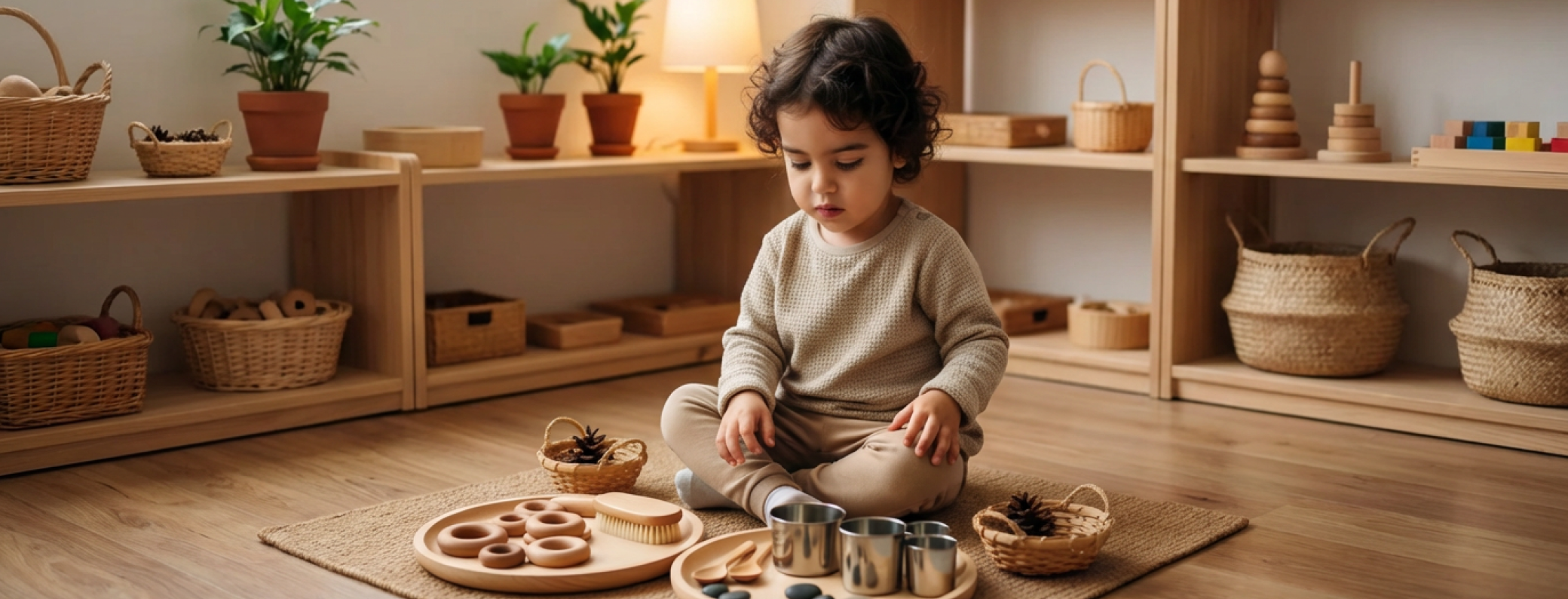
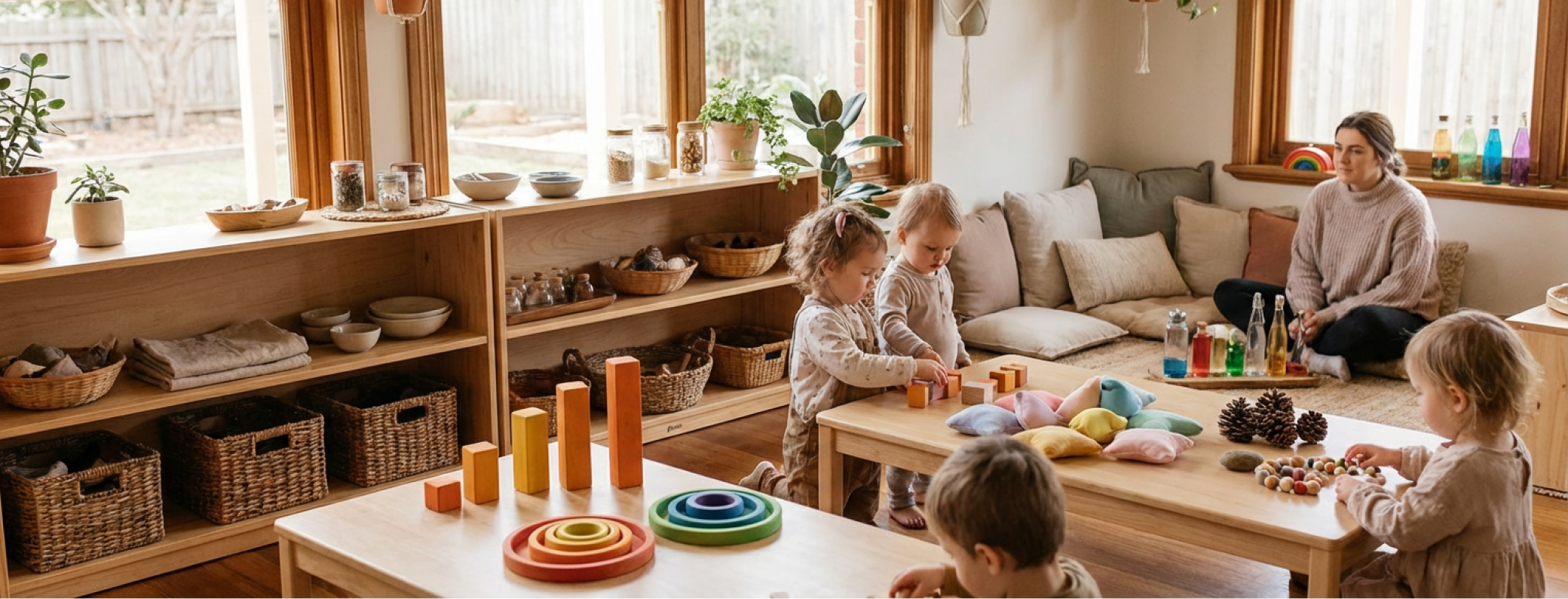
Saving Childhood One Mud Kitchen at a Time
We Need to Talk About Play (Again)
There is a global crisis happening right now, and it has nothing to do with inflation, AI, or the price of coffee (although all three deserve their own dramatic soundtrack).
The crisis is this:
Children today are playing less than ever before.
But you already know that.
You’ve seen the toddler who can swipe an iPad but can’t stack a block.
The preschooler who knows the YouTube algorithm by heart but freezes when handed open-ended materials.
The parent who proudly announces, “She’s learning coding at 3!” but panics when their child brings home a muddy shirt from outdoor play.
Early childhood educators across the world from Dubai to Denmark, from Toronto to Singapore are all asking the same question:
How did play become endangered?
And more importantly:
How do we save it before it becomes a museum exhibit?
This is my love letter, war cry, stand-up routine, and research-informed rallying call to put play back where it belongs at the center of childhood.
It’s a story about sand, sticks, loose parts, risk-taking, laughter, mud, imagination, and the deep belief that children learn best when we stop interrupting them every five seconds.
It’s also a story about us, the educators, leaders, parents, and humans who want to give children the childhood they deserve, whether the playground is a desert, a forest, a rooftop, a courtyard, or a classroom filled with cardboard boxes.
So grab your coffee (or karak, or chai, or matcha this is an international crowd), and let’s get into it.
Childhood Has Changed And Not Always for the Better
Childhood used to be simple.
Kids went outside, disappeared for hours, collected questionable sticks, came home with bruises (the proud kind), and told stories that may or may not have been true.
Now?
Children are supervised by:
• parents
• GPS trackers
• smart watches
• three cameras in the nursery classroom
• and an app that tells you exactly how many grapes they ate for snack
We traded freedom for safety, boredom for screens, and exploration for structured “enrichment.”
And while every society has its reasons busy parents, academic pressure, safety fears, heat, cold, technology, overscheduling the result is the same:
Children are losing the natural opportunities that once built creativity, resilience, problem-solving, and emotional intelligence.
International studies show that, in many countries:
- Children spend less time outdoors than prisoners.
- Preschoolers spend more time in structured lessons than free play.
- Recess is shrinking.
- Homework is creeping down the age ladder.
- Screen time is increasing exponentially.
- Spontaneous play is disappearing.
It’s not just sad, it's dangerous.
Because play isn’t entertainment.
It’s development.
It’s cognition.
It’s social learning.
It’s emotional regulation.
It’s problem-solving.
It’s science, math, language, storytelling, physics, art, and leadership all disguised as fun.
And if childhood loses play?
Everything else starts to wobble.
Why Play Is the Most Misunderstood Concept in Early Education
Here’s the thing:
Play is incredibly easy to do, but incredibly difficult to explain to adults.
Try telling someone, “Children learn best through play” and see what happens.
They nod politely.
They smile.
Then they ask:
“So… when do the children actually start learning?”
In many countries, especially fast-paced or academically competitive ones, play is seen as:
- “cute but optional”
- “a break from learning”
- “what kids do while grown-ups talk”
- “less valuable than worksheets”
- “messy”
- “unstructured”
- “something we do on Fridays if we finish the real work”
Meanwhile, neuroscientists are yelling from the rooftops:
Play is the real work
Play literally builds the brain.
Hands-on experiences create neural pathways.
Social play wires emotional intelligence.
Risky play strengthens executive function.
Pretend play builds language and symbolic thinking.
Outdoor play supports sensory integration and motor development.
But instead of celebrating this research, many societies have doubled down on early academics:
- flashcards for toddlers
- handwriting worksheets in preschool
- early literacy programs
- “school readiness training”
- lessons that look suspiciously like Year 1, 2, or 3
Let’s be real.
No four-year-old has ever said:
“I wish I had started worksheets earlier.”
But plenty of adults say to educators:
“Can you add more academics?”
And educators everywhere especially in global markets like the UAE, Canada, the UK, Asia, and the US feel the pressure to make play “look productive.”
Which leads to a question I hear constantly:
How do we convince grown ups that play is learning?
The answer?
We make the learning visible and we make the explanation unforgettable.
The Rise of “Performance Parenting” and the Vanishing Playroom
Parents today are drowning in advice.
Everywhere they turn, someone is saying:
“Stimulate your toddler’s brain!”
“Teach them to code!”
“Don’t give too much screen time!”
“But also get educational apps!”
“Independent play builds resilience!”
“But supervised play builds safety!”
“Let them get bored!”
“But also offer sensory trays!”
It’s no wonder parents are exhausted.
And exhausted parents often choose the path that seems easiest: technology or structured activities.
This is not a criticism. It’s reality.
Many homes worldwide feature:
- academic flashcard apps
- toddler enrichment centers
- screen-based learning
- educational subscriptions
- tight daily schedules
Parents worry their child will “fall behind”even when no one can agree on what “behind” means.
But here’s the kicker:
Children who play freely are ahead in all the ways that truly matter.
They can think creatively, problem-solve independently, collaborate naturally, regulate their emotions, and embrace challenges.
Play isn’t a luxury.
It is preparation for life.
Why Educators Feel Like Play Warriors (Because They Are)
Early years educators around the world are fighting daily battles and the battlefield is the playroom.
What they wish they could say (but can’t always):
- “Yes, your child learned something today even if it wasn’t a worksheet.”
- “No, teaching a 3-year-old to read early does not give them an academic advantage later.”
- “Please trust me. This mud kitchen is more educational than a workbook.”
- “They don’t need more ‘school readiness.’ They need more play-readiness.”
Educators become advocates, translators, negotiators, champions, and sometimes comedians just to defend children’s right to play.
And they are doing this in wildly different environments:
- In the UAE, heat dictates outdoor schedules but centres are innovating with shaded play, desert exploration, and water-based sensory learning.
- In Canada, winter lasts nine months (or feels like it) yet outdoor education thrives through snow play, forest schools, and winter gear.
- In Singapore, space is limited yet educators create magical indoor outdoor hybrids.
- In the UK, forest school philosophy has exploded.
- In the US, play based education competes with rising academic pressure.
- In Europe, play remains a cultural norm though even there, screens compete for attention.
No matter where you are, one truth remains:
Educators are the last line of defense in the play crisis.
And they need support from parents, leaders, and policy makers urgently.
What Play Teaches That Worksheets Never Will
Here’s what a worksheet can’t do:
- teach negotiation
- build resilience
- teach emotional literacy
- strengthen balance or motor skills
- give confidence
- foster imagination
- support sensory integration
- teach real problem-solving
- strengthen friendships
- build executive functioning
- develop creativity
- nurture curiosity
Play does all of this easily, naturally, beautifully.
A worksheet teaches one right answer.
Play teaches infinite possibilities.
A worksheet ends when the page is full.
Play ends when the imagination does.
A worksheet tests memory.
Play builds intelligence.
That’s why we need to save it fiercely.
How to “Sell” Play to Parents (Without Needing a PowerPoint or a Nervous Breakdown)
Let’s be honest:
Sometimes explaining play feels like explaining quantum physics to a toddler.
Parents want the best for their children. But they’ve also been fed a steady diet of:
- “Earlier is better.”
- “Academics start in preschool.”
- “My friend’s child is already reading!”
- “Does your center offer STEM lessons for 2-year-olds?”
Educators respond with:
- “Actually, play is STEM.”
- “Early literacy is built through oral language, not flashcards.”
- “No one wins a prize for reading at age 3.”
- “Your child stacked 12 blocks today, and that’s geometry.”
But sometimes the message gets lost.
So here are some witty, research backed lines educators around the world swear by (and yes, you have my permission to use them):
- 1. “Play looks like fun. It is fun. But behind the scenes, the brain is doing Olympic level gymnastics.”
Parents love this.
It makes the play sound both joyful and scientifically impressive.
- 2. “In play, your child is developing the skills they’ll need for the next 90 years. Worksheets build skills for the next 5 minutes.”
Accurate and dramatic. Perfect combination.
- 3. “If you want a child who thinks creatively as an adult, you need a child who plays imaginatively right now.”
Innovation starts in pretend kitchens, not in early math drills.
- 4. “We can teach a 3-year-old to sit still and memorize… but we shouldn’t.”
This one hits hard in a good way.
- 5. “When your child plays, they’re practicing being human.”
This one melts hearts.
It’s also the truth.
When parents understand that play builds real skills, emotional regulation, resilience, literacy foundations, social intelligence, executive functioning something shifts.
They go from “Why is my child playing all day?”
to
“I never realized how powerful play really is.”
And that moment?
That’s victory.
Risky Play Why Scraped Knees Build Strong Brains
Cue the dramatic music.
Nothing divides parents quite like risky play.
- In Denmark, children climb trees taller than your mortgage.
- In Canada, they balance on logs and slide down snowy hills.
- In the UK, they use tools in forest school.
- In the UAE, they navigate uneven desert sand and sensory terrain.
- In the U.S., risky play often triggers paperwork.
But risky play isn’t reckless play.
It is:
- balancing on logs
- climbing
- rough and tumble wrestling
- jumping from slightly too high
- exploring with sticks
- running fast
- taking physical risks
- figuring out personal boundaries
When done safely and with supervision, risky play teaches children:
- self regulation
- judgment
- courage
- body awareness
- resilience
- coordination
- problem solving
- confidence
And here’s the irony:
Children who never experience small risks tend to take bigger, unsafe ones later.
Because they never learned to assess danger.
Risky play appropriate, supervised, developmentally aligned gives children the emotional and physical tools they need for life.
Also, let’s be real:
Jumping off a log is simply way more satisfying than tracing a letter “A.”
Screens vs. Play The Tug of War of Modern Childhood
Screens are the broccoli of early childhood conversations.
No one enjoys the topic, but everyone knows it’s good for them.
Let’s keep it honest:
Screens aren’t the villain.
They are tools.
But like all tools, they are only effective when used intentionally.
The problem is not technology itself, it's the displacement.
For many children, screens have replaced:
- boredom (which builds creativity)
- physical activity
- real social interaction
- sensory exploration
- outdoor time
- imagination
Across the world, screen time rates for preschoolers are skyrocketing, especially in densely urban or high-tech regions.
But here’s the key message educators should share:
Screens add to learning.
Play creates learning.
Screens can support:
- language exposure
- communication with family across borders
- digital literacy
- storytelling
But play supports:
- brain architecture
- executive functioning
- emotional resilience
- motor development
- sensory integration
- creativity
Screens can entertain a child.
Play transforms them.
When educators explain that screens cannot replace physical exploration, sensory play, or peer interaction, parents begin to recalibrate.
And balance not elimination becomes the goal.
The Global Play Gap Why Some Children Play More Than Others
Around the world, play opportunities vary dramatically.
Countries with strong play cultures:
- Denmark
- Sweden
- Norway
- Finland
- New Zealand
- Scotland (increasingly)
- Canada (especially forest school communities)
These countries embed play into:
- policy
- teacher training
- curriculum
- daily routines
- outdoor culture
Meanwhile…
Countries where play is increasingly threatened:
- UAE (due to heat + academic pressure)
- Singapore (academic rigor)
- U.S. (testing culture)
- UK (rising assessments)
- China (intense tutoring culture)
- Many Middle Eastern & Asian markets
This is not about value judgments, it's about reality.
Some countries are:
- hot
- urban
- highly competitive
- parent-driven
- safety-conscious
These systems unintentionally prioritize academics over play.
But here’s the hopeful part:
Play-based education is rising everywhere.
International schools, nurseries, and play-focused centres are:
- expanding their outdoor spaces
- adding loose parts
- redesigning schedules
- reducing early academics
- training teachers in play pedagogy
- educating families
- offering forest-school sessions even in the desert
The global shift is happening and educators are leading it.
Loose Parts The Play Material Taking Over the World
If play had a celebrity mascot, it would be Loose Parts.
Loose parts are:
- sticks
- stones
- tubes
- shells
- bottle caps
- boxes
- baskets
- fabric
- pinecones
- ropes
- wooden rings
- cardboard miracles
Loose parts exploded in popularity because:
- 1. They are open-ended.
- A pinecone can be food, treasure, alien technology, or currency.
- 2. They support creativity without adult direction.
Children control the narrative, not the toy.
- 3. They are cheap or free.
Budget friendly brilliance.
- 4. They adapt to any culture, climate, or classroom size.
- They invite deep play states.
5. You know when a child is so focused you could clap next to them and they wouldn’t notice?
That’s a deep play state.
Loose parts create those moments.
Educators everywhere report that loose parts:
- improve language development
- motivate collaboration
- build mathematical thinking
- strengthen problem solving
- reduce conflict
- increase engagement
So yes… a basket of bottle caps can outperform a $500 electronic toy.
Turns out, simplicity wins.
How Any Early Years Centre Can Become a Play Haven
Here’s the best part:
You do not need a forest school or a Scandinavian budget to create a play-rich environment.
Here’s what is universal:
-
1. Time
Uninterrupted play is rare. Gift it generously.
-
2. Space
Even a corner can become a world.
-
3. Trust
Step back so children can step forward.
-
4. Loose parts
Simple things spark powerful play.
-
5. Outdoors
Any climate can support outdoor learning with thoughtful planning.
-
6. Adults who understand the value of play
The most important ingredient of all.
Whether you work in:
- a desert nursery
- a Canadian forest school
- a high-rise center in Singapore
- a suburban U.S. preschool
- a UK village setting
…play can thrive.
Play doesn’t need perfection.
It needs permission.
What Happens When We Protect Play The LongTerm Benefits
We’ve talked about the crisis, the research, the risks, the screens, the loose parts. Now let’s imagine a world where play is fully restored to childhood.
It looks like this:
Children who can think independently
Children who solve problems without waiting for adult instruction.
Children with emotional resilience
Because navigating a disagreement over who gets the blue shovel prepares you better for life than memorizing the letter “B.”
Children with advanced creativity
Because imagination grows when the brain isn’t spoon-fed entertainment.
Children with stronger academic foundations
Because early reading is built on oral language, storytelling, and symbolic play — not worksheets.
Children who have stronger physical and sensory integration
Because you can’t build balance sitting at a table.
Children who know how to negotiate, collaborate, and lead
Because “Who gets to be the dragon?” is the child version of a corporate board meeting.
When you protect play, you’re not just saving childhood
you’re shaping future adults who are capable, empathetic, and creative.
This is the part policymakers sometimes miss:
Play isn’t preparing children for school.
Play is preparing children for life.
Climate, Culture, and the Global Future of Play
The beauty of play?
It transcends borders, languages, and climates.
Whether children grow up in:
- the heat of Abu Dhabi
- the snowy forests of Québec
- the rain-soaked fields of Scotland
- the skyscraper jungles of Singapore
- the dense cities of London or Hong Kong
- the wide-open prairies of the U.S. Midwest
- the beaches of Australia
…play adapts.
In hot climates
Educators build shaded outdoor learning spaces, use water play strategically, and schedule play early in the morning or late afternoon.
In cold climates
Children put on gear and learn that “there is no bad weather, only bad clothing.” Snow becomes a creative medium just like sand.
In wet climates
Puddles become small oceans, mud becomes paint, and waterproof gear is a uniform.
In high-density cities
Play happens on rooftops, courtyards, indoor climbing structures, and tiny pockets of green.
In rural or nature-rich regions
Play expands, deepens, and immerses children in outdoor learning naturally.
Climate shapes the how.
Culture shapes the attitude.
But the need for play?
Universal.
Play and Technology A Future Where Both Must Coexist
The global early years sector is already navigating the next challenge:
How do we integrate technology without sacrificing play?
Here’s the realistic answer:
- Technology is here to stay.
- Screens are not going extinct.
- AI tools will enter classrooms.
- Digital literacy will matter.
But none of this replaces:
- sensory exploration
- human relationships
- imaginative thinking
- physical mastery
- social problem-solving
Technology can be a companion.
Play must be the foundation.
Future early years classrooms will blend:
- digital storytelling
- real life role play
- outdoor exploration
- robotics with loose parts
- screen based literacy tools used intentionally
- hands on sensory experiences
- AI assisted learning with human emotional support
The best global early years settings will strike a balance where technology supports but never replaces the natural learning that play provides.
The Educator’s Superpower Being a Play Defender
Let’s take a moment to appreciate early years educators everywhere.
You are:
- part teacher
- part negotiator
- part comedian
- part scientist
- part therapist
- part storyteller
- part engineer
- part firefighter (metaphorically… usually)
- part childhood protector
And within all these roles, you are also:
A Play Defender
- You defend play when parents question it.
- You defend play when curriculum pressures creep in.
- You defend play when you’re asked for more assessments, more documentation, more “academics.”
You defend play because you know what it builds.
Educators are the last guardians of childhood in many societies.
When they stand firm, articulate clearly, show evidence, and communicate passionately — play survives.
And every child who thrives in a play rich environment becomes living proof of your advocacy.
A Play Strategy for Educators, Parents, and Leaders
Let’s put into words what we all believe.
A Global Play Strategy
- Children deserve unstructured time to play.
- They deserve environments that spark curiosity.
- They deserve to climb, run, jump, imagine, explore, and invent.
- They deserve to get messy.
- They deserve to make mistakes.
- They deserve spaces designed for discovery, not perfection.
- They deserve adults who trust them.
- They deserve classrooms that honor childhood.
- They deserve the emotional and cognitive benefits that only play can deliver.
No society ever regretted raising children who could think creatively, collaborate, and solve problems.
Yet many societies regret pushing academics too early.
Our strategy is simple:
- Protect play.
- Prioritize play.
- Celebrate play.
- Fight for play.
Because every time a child enters a deep state of imaginative wonder… the future gets a little brighter.
What Policymakers Need to Hear
To create lasting change, we must take the message beyond classrooms:
Dear policymakers…
- Children do not need more testing.
- They do not need more structure.
- They do not need earlier academics.
- They do not need more screen-based programs.
- They do not need pressure.
They need to play.
Funding should support:
- outdoor learning
- educator training
- music, art, and movement
- loose parts
- sensory equipment
- child-led environments
- nature-based experiences
- early years specialists
If policymakers want globally competent, emotionally intelligent, future-ready adults
they must invest in protecting childhood today.
A Celebration of Play A Reminder
Let’s end with some humor that also happens to be absolutely true.
Things children learn from play that no worksheet has ever taught:
- How to negotiate a turn on the swing
- How to solve a dispute without HR
- How to build a tower with questionable physics
- How to turn a stick into 47 different objects
- How to survive disappointment when someone steals the good dinosaur
- How to make friends using only eye contact and a shared bucket
- How to manage risk without bubble wrap
- How to stay fascinated by a puddle for 14 minutes straight
- How to experience pure joy without adult approval
- How to cope with small failures (the block tower always falls)
- How to create entire worlds using imagination alone
Worksheets can’t compete.
Screens can’t compete.
Early academics can’t compete.
Play wins.
Every time.
Saving Childhood, One Playful Moment at a Time
If you take only one message from this entire 6000-word blog, let it be this:
Childhood is not a race. It is a journey and play is the path.
Play builds strong brains.
Play builds strong bodies.
Play builds strong emotional foundations.
Play builds strong thinkers.
Play builds strong humans.
You, the educator, the leader, the parent, the advocate are part of a global movement to restore childhood to its rightful place.
Whether you teach in:
- the UAE
- Canada
- the US
- Europe
- Africa
- Asia
- Australia
…your mission is the same:
Protect play. Promote play.
And never apologize for putting childhood first.
Because the world needs more children who know how to imagine, create, collaborate, problem-solve, laugh, explore, and love learning.
The world needs more play.
And thanks to you, play still has a fighting chance.
-1.svg "parentapp-logo (1)-1")


 Billing, Invoicing Automation & Smart Finances
 Communication & Engagement
 Child Development & Progress
 Waitlist, Forms & Attendance
 Effortless Team Management
 Daily Updates That Matter
 Templates & Printables
 Blogs
Blogs
 Webinars
 Case Studies & Testimonials
 FAQs
FAQs
 Help Center


 December 23,2025
 Hiba Dahche